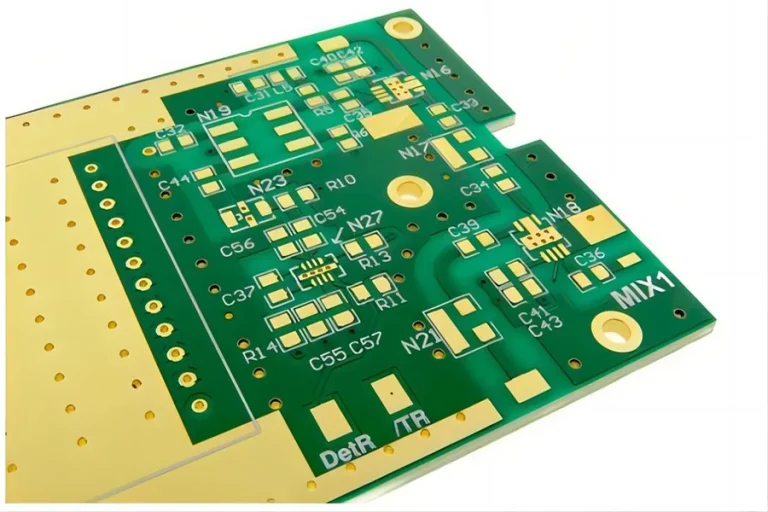
Bare Circuit Board: Foundation of Modern Electronics
In the world of electronics, every device we use—from smartphones and laptops to industrial machinery and medical equipment—relies on a crucial foundation: the Bare Circuit Board. Often referred to as a bare PCB, this is the essential platform that supports the electronic components, provides interconnections, and enables the entire system to function. Without it, electronic devices as we know them would not exist.
A Bare Circuit Board is essentially a board without any mounted components. It consists of a non-conductive substrate with copper traces or conductive pathways etched onto it. These traces act as the highways that allow signals and electricity to flow between components once they are assembled. Though it may look simple in its raw form, the bare board plays a critical role in ensuring proper circuit operation, durability, and reliability.
What is a Bare Circuit Board?
A Bare Circuit Board is the unassembled version of a printed circuit board. It includes all the copper traces, pads, and vias, but it has not yet undergone the assembly stage where resistors, capacitors, microchips, and other components are soldered. Essentially, it serves as the blank template upon which electronics are built.
These boards can be single-sided, double-sided, or multilayered, depending on the complexity of the circuit design. Advanced electronics often use multilayer bare PCBs, which have multiple conductive layers stacked together to handle high-speed signals, reduce interference, and support compact designs.
Importance of Bare Circuit Board in Electronics
The Bare Circuit Board is not just a structural platform; it is a vital part of electronic system design. It ensures that electrical signals are transmitted accurately, efficiently, and with minimal loss. The reliability of any electronic device starts with the quality of its bare board.
When designed properly, a bare board provides:
- Stable signal transmission.
- Mechanical support for components.
- Heat dissipation for improved performance.
- Long-term durability even in challenging environments.
This makes bare PCBs indispensable across industries ranging from consumer electronics and telecommunications to automotive, aerospace, and medical technologies.
Materials Used in Bare Circuit Board
The choice of materials is critical in Bare Circuit Board design and performance. Commonly, FR4 (a glass-reinforced epoxy laminate) is used because of its durability, cost-effectiveness, and insulating properties. For high-frequency or specialized applications, materials like Rogers laminates, aluminum substrates, or polyimide may be used.
The copper layer, which forms the conductive traces, can vary in thickness depending on the power and signal requirements of the application. Surface finishes such as HASL (Hot Air Solder Leveling), ENIG (Electroless Nickel Immersion Gold), or OSP (Organic Solderability Preservatives) are often applied to protect the exposed copper and ensure good solderability during assembly.
Applications of Bare Circuit Board
The versatility of the Bare Circuit Board makes it a universal foundation in modern electronics.
Consumer Electronics
Devices like smartphones, tablets, TVs, and gaming consoles rely heavily on reliable bare PCBs to support miniaturized designs and high-speed processing.
Industrial Electronics
Automation systems, power supplies, and monitoring devices use robust bare boards for long-term operation under demanding conditions.
Automotive Sector
Modern vehicles with ADAS, infotainment systems, and advanced sensors require high-quality bare PCBs to ensure safety and efficiency.
Medical Devices
Precision equipment like diagnostic machines, patient monitoring systems, and imaging devices depend on carefully designed bare boards for stable and accurate performance.
Aerospace and Defense
Harsh environments demand durable bare circuit boards that can withstand extreme temperatures, vibrations, and radiation without performance degradation.
Manufacturing Process of Bare Circuit Board
The production of a Bare Circuit Board involves several stages, each requiring precision and quality control.
- Design & Layout – Engineers create the circuit schematic and PCB layout using CAD software.
- Substrate Preparation – The base material, such as FR4, is laminated with copper.
- Patterning/Etching – Photolithography and chemical etching are used to form the copper traces.
- Drilling & Via Formation – Holes are drilled for component placement and inter-layer connections.
- Surface Finishing – Protective coatings and finishes are applied to the exposed copper pads.
- Inspection & Testing – Advanced inspection methods such as AOI (Automated Optical Inspection) and electrical testing ensure quality before the board proceeds to assembly.
Each of these steps ensures that the bare PCB can handle the electrical and mechanical requirements of its intended application.
Advantages of Bare Circuit Board
The Bare Circuit Board offers several advantages that make it the backbone of electronics manufacturing. It provides compact designs by replacing bulky wiring systems, reduces the chances of short circuits, and enhances assembly efficiency. Furthermore, bare PCBs improve heat dissipation and ensure consistency in mass production, making them highly reliable and cost-effective for manufacturers.
Future of Bare Circuit Board
As electronics evolve toward miniaturization, high-speed processing, and energy efficiency, the Bare Circuit Board will continue to advance. Emerging technologies such as flexible PCBs, HDI (High-Density Interconnect) boards, and 3D printed PCBs are pushing the boundaries of what bare boards can achieve. With the rise of IoT, 5G, and AI-driven devices, bare PCBs will remain at the heart of technological progress.
Conclusion
The Bare Circuit Board is the essential foundation of modern electronics, providing both structural and electrical support for the devices we rely on daily. From smartphones to satellites, no electronic innovation can exist without this vital component.
For businesses seeking high-quality solutions, choosing the right Bare Circuit Board Manufacturer is crucial. A trusted manufacturer ensures precision engineering, strict quality control, and reliable performance, giving your products the strong foundation they need to succeed in competitive markets.