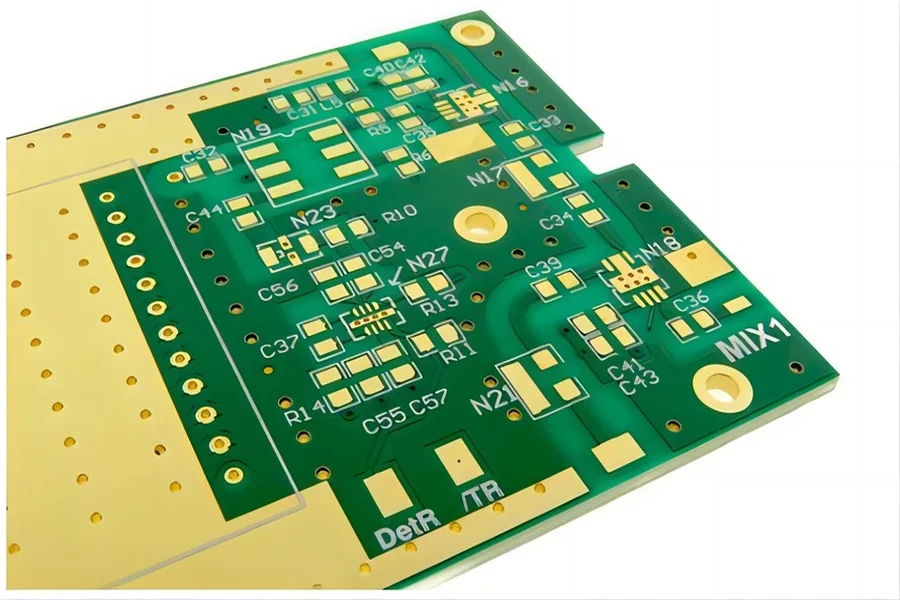
Microwave PCB: The Backbone of High-Frequency Electronics
A microwave PCB is a specialized printed circuit board designed to operate efficiently at microwave frequencies, typically ranging from 300 MHz to 300 GHz. These boards are built with high-performance materials that ensure low dielectric loss, tight impedance control, and excellent thermal stability. Microwave PCBs are critical in applications that demand high-speed and high-frequency performance, including radar systems, satellite communication, aerospace electronics, and 5G wireless infrastructure.
Unlike standard FR4 boards used in conventional electronics, microwave PCBs require substrates that support signal integrity at higher frequencies. Materials such as PTFE (Teflon), ceramic, and specialized laminates like Rogers and Taconic are commonly used in their construction. These materials maintain stable dielectric properties over a wide range of frequencies and temperatures, ensuring reliable signal transmission with minimal losses or interference.
Characteristics of Microwave PCB
One of the standout features of a microwave PCB is its low dielectric loss. This ensures that high-frequency signals travel through the board without significant attenuation. In high-speed RF applications, even minor losses can affect overall system performance. That’s why materials used in microwave PCBs are specifically chosen for their low dissipation factors and consistent dielectric constants.
Impedance control is another essential feature. Microwave circuits demand precision in impedance matching to avoid signal reflections and performance degradation. Microwave PCBs are designed with strict control over trace width, spacing, and layer stack-up to maintain consistent impedance throughout the signal path.
Thermal management is equally important in microwave PCB applications. The heat generated by high-frequency components can be substantial, and the PCB must dissipate this heat efficiently. Materials like ceramic and metal-backed laminates are often used to improve heat transfer and support stable operation under elevated temperatures.
Applications of Microwave PCB
Microwave PCBs are at the core of many advanced technologies. In satellite and radar communication, these boards handle signal transmission and reception with minimal loss, enabling real-time communication and data exchange over long distances. In 5G networks, microwave PCBs support base stations and antennas that operate at millimeter-wave frequencies, delivering faster internet and low latency connections.
In the automotive industry, modern vehicles are equipped with radar-based driver assistance systems such as collision avoidance, lane departure warning, and adaptive cruise control. These systems rely heavily on microwave PCBs for reliable performance. Similarly, in aerospace and defense, microwave PCBs are used in mission-critical systems where reliability, performance, and environmental durability are non-negotiable.
Design and Manufacturing Considerations
Designing a microwave PCB requires a high level of engineering precision. Parameters such as trace geometry, layer configuration, and via structures must be optimized to support high-frequency signal integrity. Even slight deviations can introduce signal distortions or losses.
The choice of surface finish also affects the electrical performance of microwave PCBs. Finishes like ENIG (Electroless Nickel Immersion Gold), silver, or soft gold are preferred because of their smooth surface and excellent conductivity. These finishes ensure stable performance, especially in high-frequency RF applications.
Vias—used for layer interconnections—must be carefully designed to minimize parasitic effects. Blind and buried vias are commonly used to reduce signal interference. Additionally, the PCB layout must account for factors like crosstalk, grounding, and electromagnetic compatibility to ensure optimal functionality.
Testing and Quality Control
Microwave PCBs undergo rigorous testing during and after manufacturing. Advanced equipment such as Time Domain Reflectometers (TDR), Vector Network Analyzers (VNA), and X-ray inspection systems are used to verify the electrical and structural integrity of the board. These tests ensure that impedance, insertion loss, and return loss parameters fall within acceptable ranges. High-reliability applications cannot tolerate faults, so manufacturers must adhere to strict industry standards.
Furthermore, the choice of laminates and materials must align with IPC specifications and customer performance requirements. Any inconsistency in lamination, bonding, or copper distribution can significantly affect the performance of microwave circuits. Therefore, choosing the right manufacturer is as important as the design itself.
The Role of the Microwave PCB Manufacturer
The performance of your final product heavily depends on the expertise of the microwave PCB manufacturer you choose. High-frequency PCB fabrication requires specialized equipment, skilled technicians, and precise process control. Not every PCB factory is equipped to meet the demanding needs of microwave applications.
An experienced microwave PCB manufacturer can guide you through the material selection process, assist with DFM (Design for Manufacturability), and ensure tight tolerance control throughout the production cycle. They also provide detailed inspection reports, prototype validation, and mass production capabilities—all under stringent quality assurance protocols.
Whether you’re working on RF modules, radar systems, wireless communication devices, or aerospace electronics, partnering with a reliable microwave PCB manufacturer ensures your product performs consistently in even the most challenging environments.